

MUTED EDIT · Folio 001
The Chatelaine Is Back: From Victorian Waists to 2026's Bag Charms
Dior's thimbles, Louis Vuitton's belt-loop watch, Prada's tiny mirror. The bag charms everyone wants this year started life as a 19th-century waist ornament.
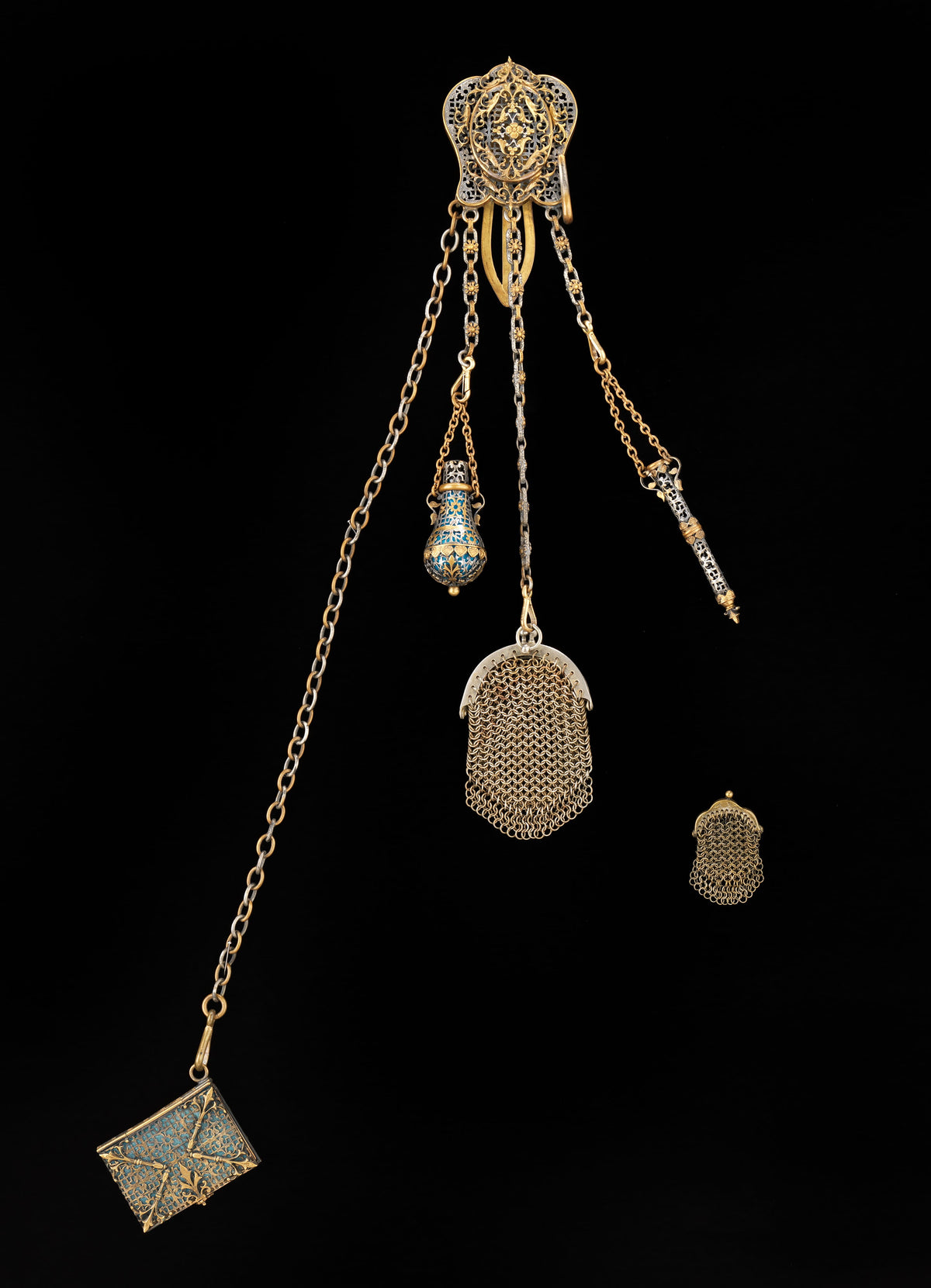
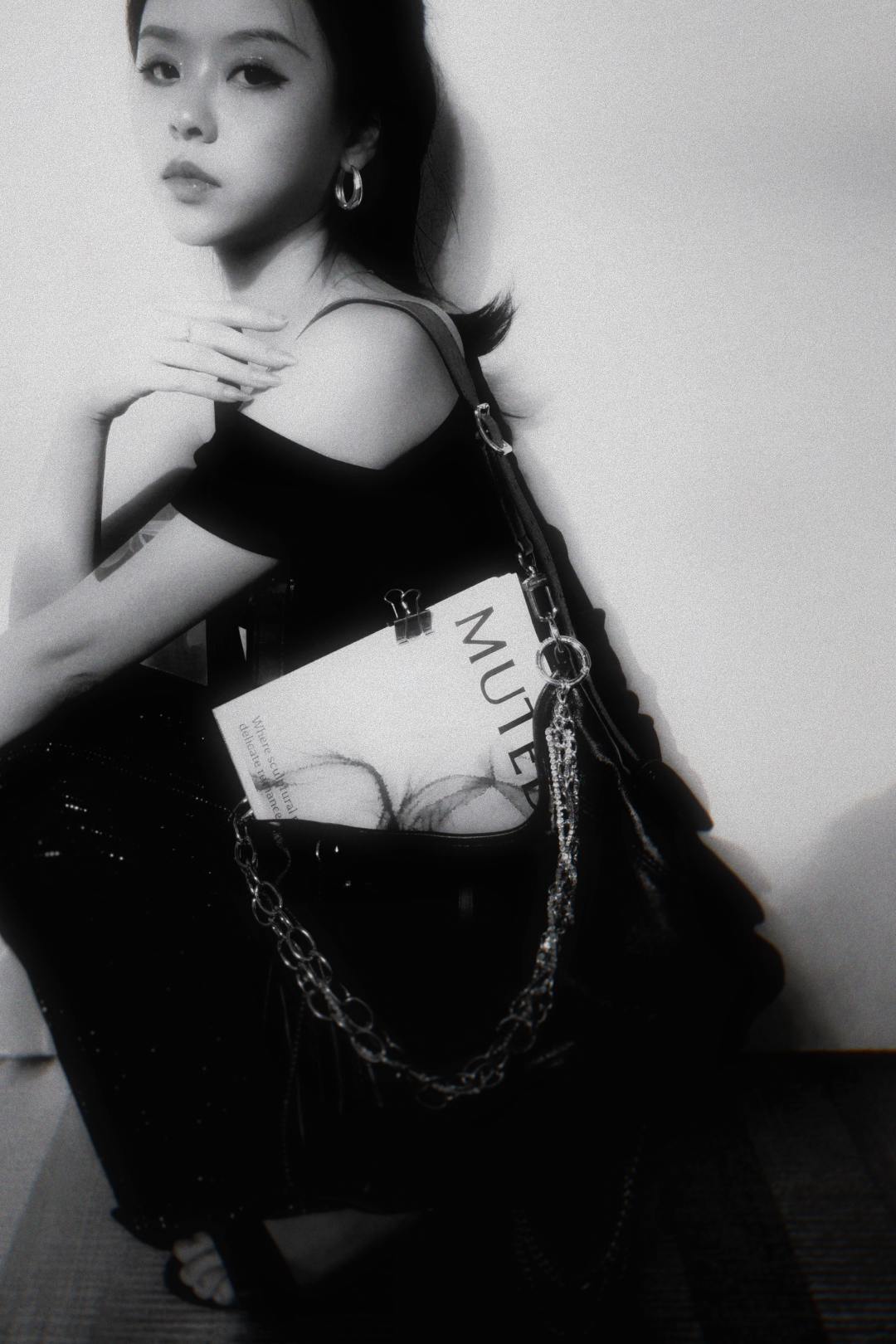
Long before anything hung from a handbag, it hung from the waist. A chatelaine is a decorative clasp worn at the waist, with short chains carrying small, useful things: scissors, a thimble, a needle case, a notebook, a watch, a mirror. For about two centuries it was one of the most personal objects a woman could wear.
This season it has come back, clipped to bags and belt loops by Dior, Louis Vuitton and Prada, under a different name. This is the written companion to MUTED EDIT Folio 001: where the chatelaine came from, how it was worn, and why so many of this year's designer bag charms look like pieces of one.
01What is a chatelaine?
The word is French and first meant the mistress of a castle, the woman who kept its keys. By the 1820s English fashion writers were using it for the ornament itself. The structure is simple: a hook or plate that sits at the waistband, and a fan of chains below it, each ending in a clip for one object.
What hung from those chains changed with the century. Eighteenth-century examples often carried a watch and a seal, or a nécessaire, a tiny case of folding tools.
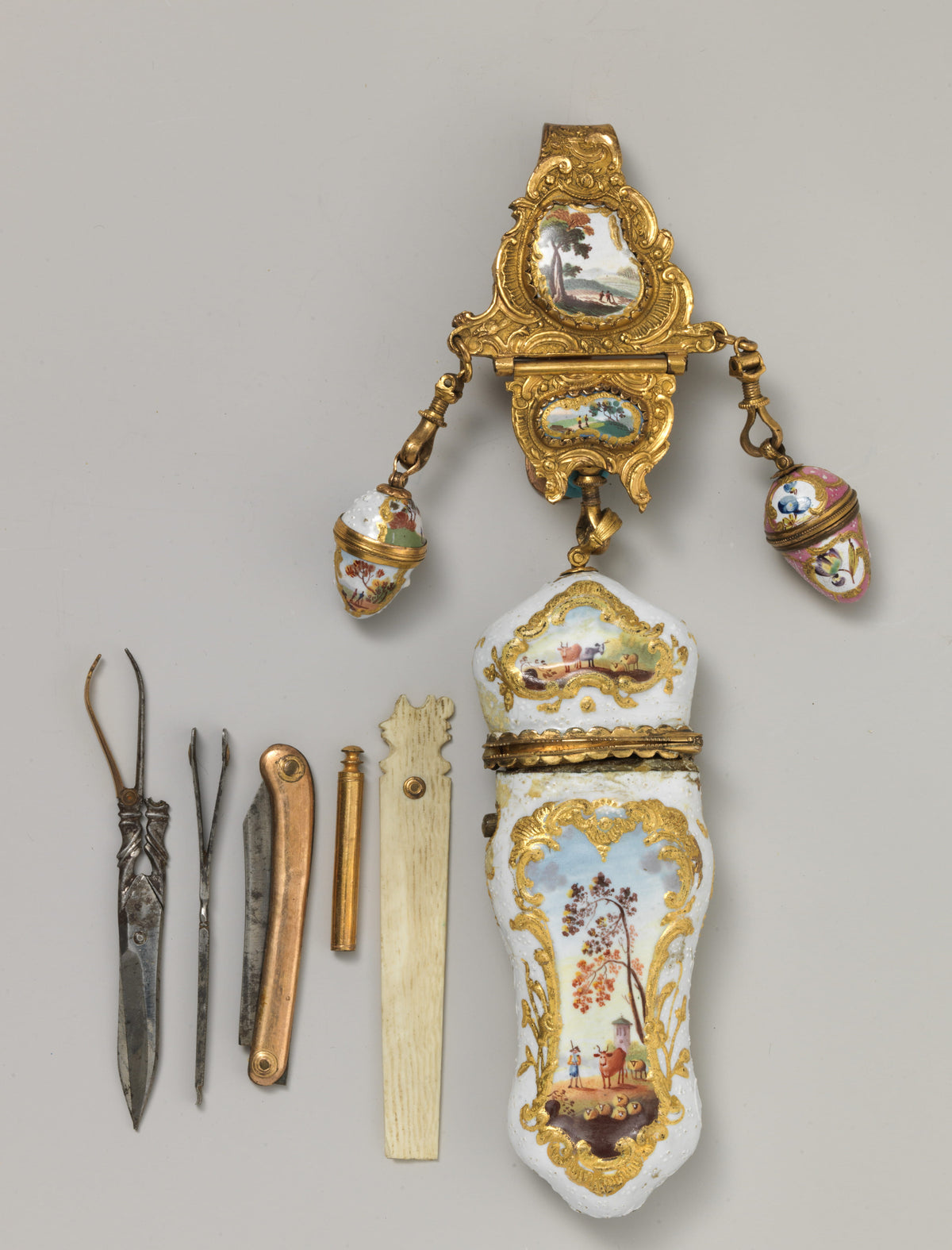
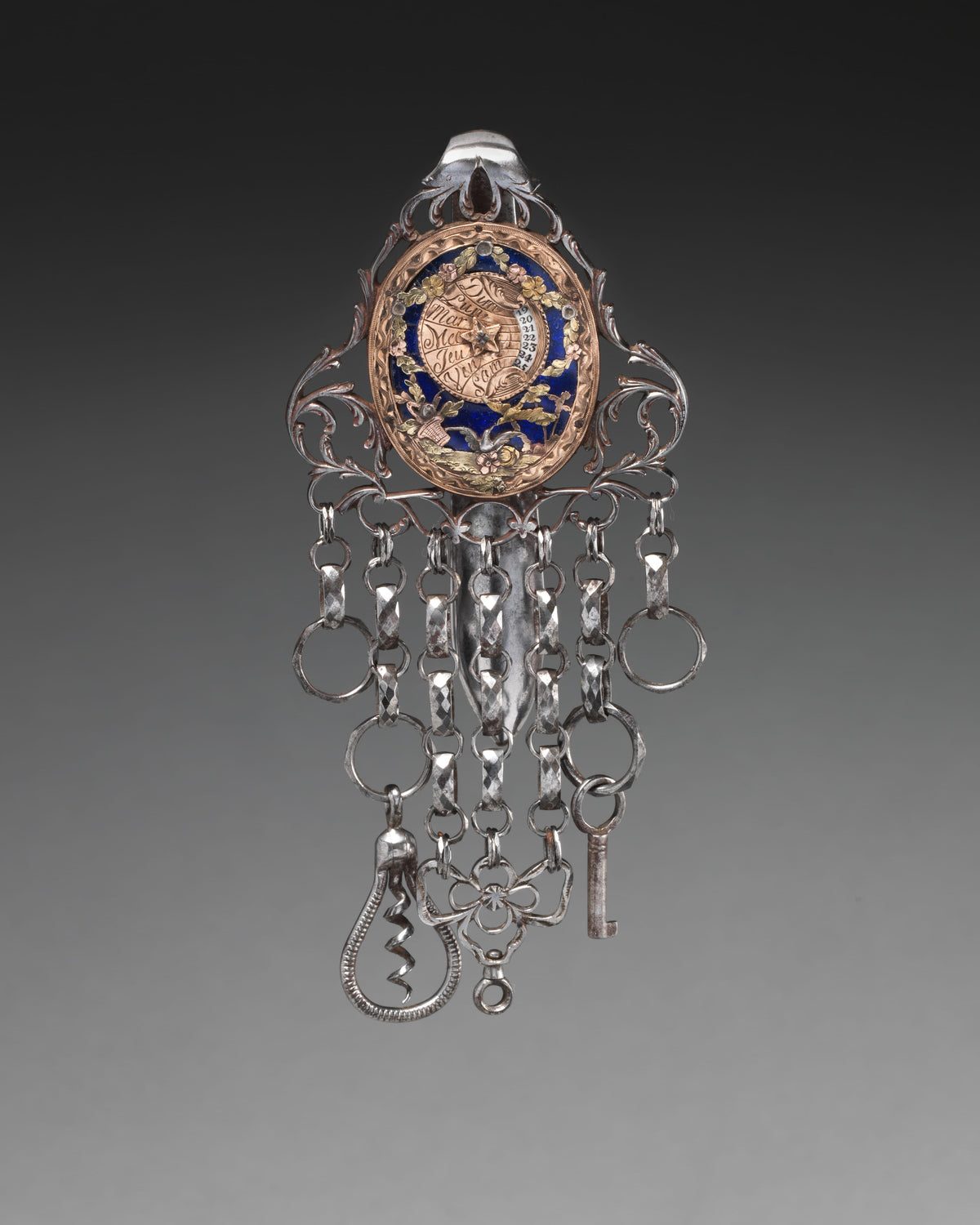
By the Victorian period the chatelaine had become a showpiece for cut steel, a technique that faceted small steel studs so they caught light almost like gems. One of the best-documented examples is a cut-steel chatelaine by Thornhill & Co., dated 1849 and now in the Royal Collection. It measures 49.1 cm and still carries a printed almanac for that year among its tools. The calendar chatelaine above, right, was made decades earlier on the same idea: keep the date at your waist.
02How Victorian women wore it
Studio portraits show where it sat. In a photograph of Emma, Lady Anderson from around 1860, the chatelaine hangs against the front of her skirt. Almost forty years later, in Alexander Bassano's 1898 portrait of Elaine Augusta Villiers, it is still there at the waist. Both portraits are in the National Portrait Gallery, London.
It was not a light accessory. When the V&A mounted a chatelaine on a replica dress in 2019, the ornament pulled the waistband down, and the team had to reinforce the belt before it would hang properly. That piece, V&A M.32-1969, has a crowned cut-steel shield with chains carrying a mirror, notebooks, a scent bottle and sewing tools. The shield bears a crowned double-A monogram. Nobody has identified the woman it belonged to.
The sewing tools are worth a closer look. Surviving needle cases from chatelaines in the British Museum and the V&A open to show small textile interiors, made to hold needles and thread. Keep them in mind for the Dior section below.
031851: the chatelaine goes public
On 1 May 1851 Queen Victoria opened the Great Exhibition in the Crystal Palace in Hyde Park. It brought together manufactured goods from around the world, and London's jewellers made the most of it. That October, Thornhill of Bond Street placed an illustrated advertisement for a chatelaine in The Illustrated London News.
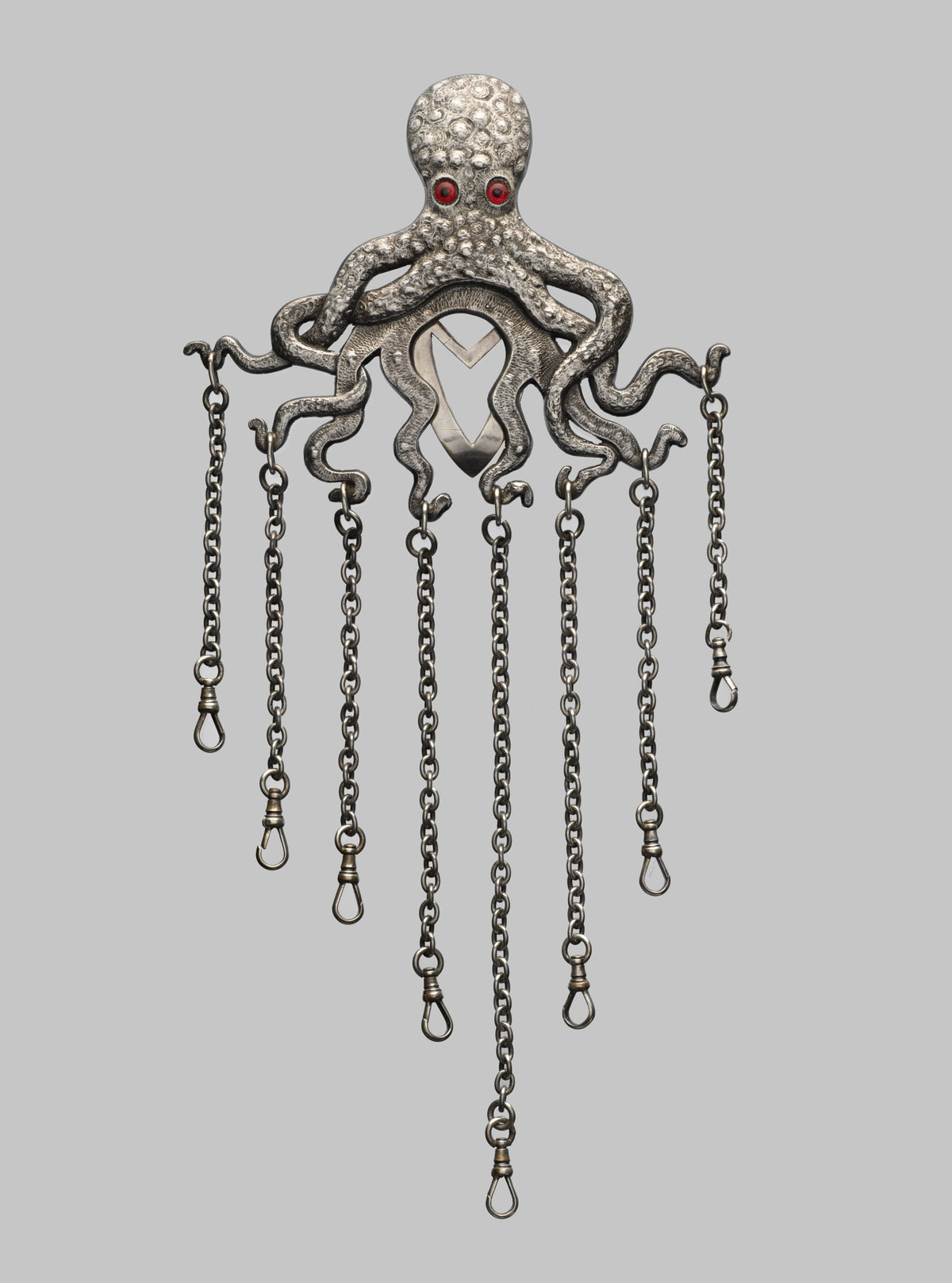
The fashion travelled. By 1887 the American silversmith Gorham was making chatelaines like this one: an octopus in silver with red glass eyes and chains falling from its tentacles.
04The chatelaine in 2026: designer bag charms
The bag charm does the job the chatelaine used to do. It hangs small personal objects where other people can see them, and the 2026 collections make the link almost literal.
Dior: the atelier, hung from a bag
Dior's charms this year are built from the tools of a couture workroom, the same tools a Victorian chatelaine carried.
- Bee bag charm: from Jonathan Anderson's collection, a bee formed from a thimble, sewing scissors and a small tape measure, on a black leather cord.
- Tape Measure Bow: a Dior tape measure worked into a pink calfskin bow (Studio Couture).
- Bobbin and Ladybug: a metal bobbin wound with blue thread, hanging below a leather bow.
- Safety Pin Bow: crystal-set safety pins, with the letters C and D hanging beneath.
- Jardin d'Atelier: a green calfskin tape measure with two gold-finish thimbles and orange daisies.
- Créatures Couture snail: a snail shaped from safety pins, beside a thimble and a working pink tape measure.
Put a thimble, scissors and a tape measure on a chain and you have the lower half of a Victorian sewing chatelaine.
The mirror, carried again
The V&A chatelaine carried a mirror, and the mirror is back. Dior's Médaillon Mirror is a leather-covered medallion that opens onto a looking glass; Dior connects the design to the Rococo decoration of its salons. Its Heart Locket Mirror for Qixi 2026 hides one inside a pink-lacquered heart. Prada's version is plainer: a leather mirror case on a snap hook and split ring.
Louis Vuitton: the watch goes back to the waist
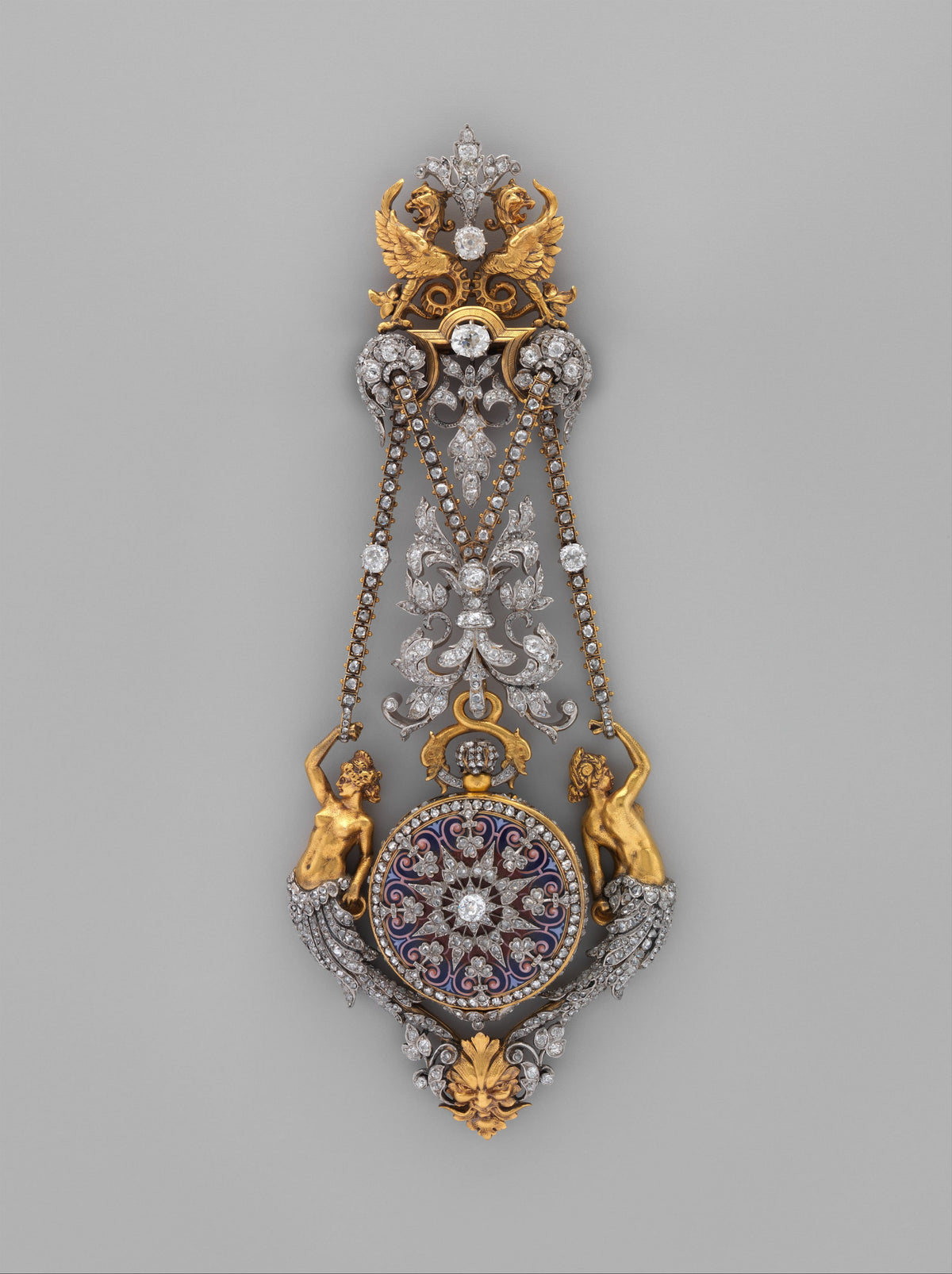
In the 18th century the watch was the chatelaine's centrepiece. At Louis Vuitton's Spring–Summer 2027 men's show, the new Monterey watch was worn hanging from a belt loop, almost exactly where a chatelaine watch once hung. The house's Tubular Chain Belt, with round links and engraved beads ending in a hexagonal LV pendant, works on the same principle.
Chanel: the chain alone
Chanel's Spring–Summer 2027 runway sent out a layered flap bag with a gold-toned chain hanging alongside it. No tool, no charm, just the chain.
05How to wear a chatelaine now
You don't need a thimble to wear one. The chain and the way it hangs carry the look, and there are three easy places to put it.
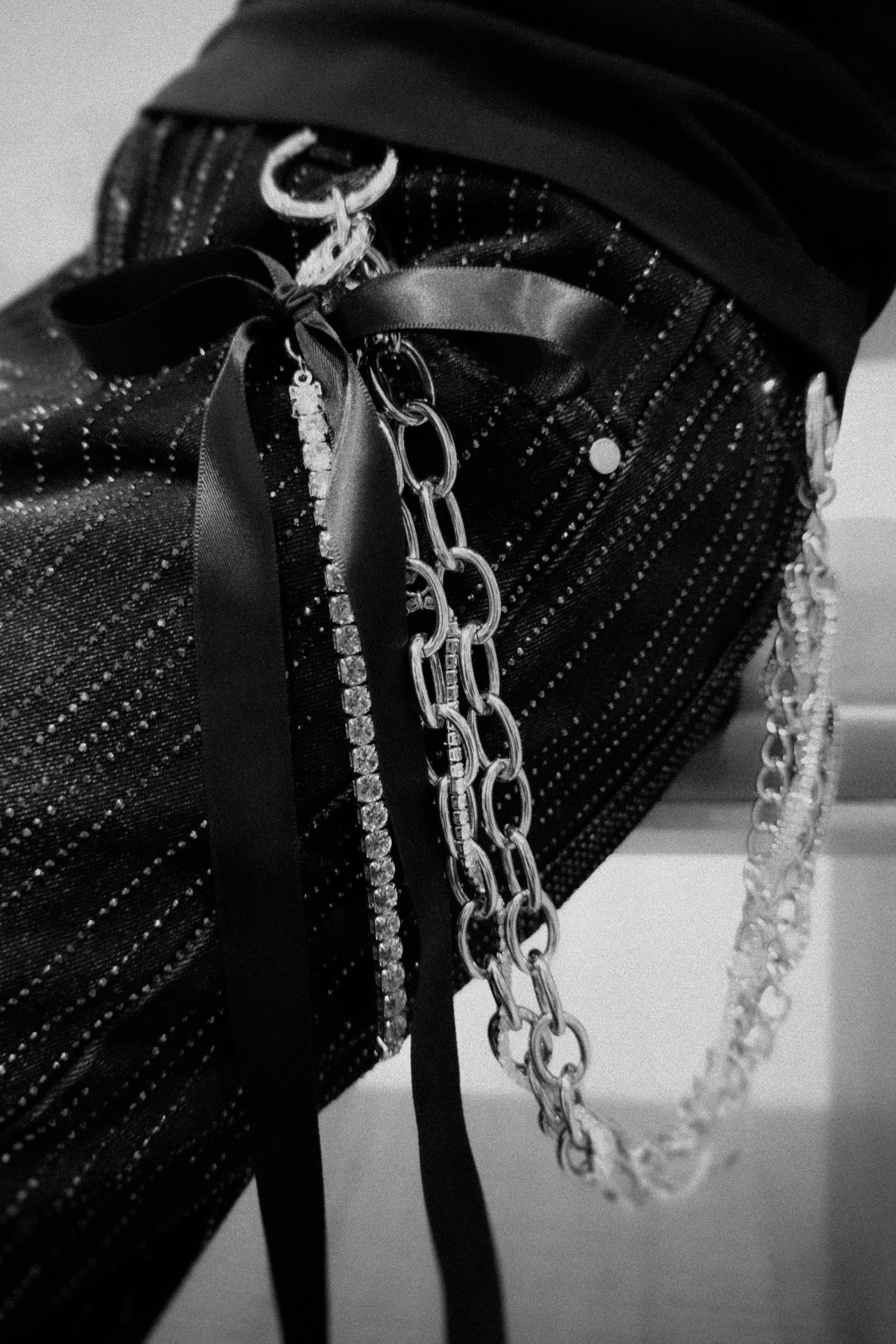
On a belt loop. This is the Victorian position and the Louis Vuitton one. Clip one end to a front belt loop and the other to a side or back loop on jeans or tailored trousers, and let the chain swing at the hip.
On a bag. Clip both ends to the handle rings or hardware so the chain falls in a loose curve across the front. It is the simplest way in, and it changes a plain bag completely.
Layered. Hang a second, shorter piece from the same clasp, the way chatelaines carried several chains at different lengths.
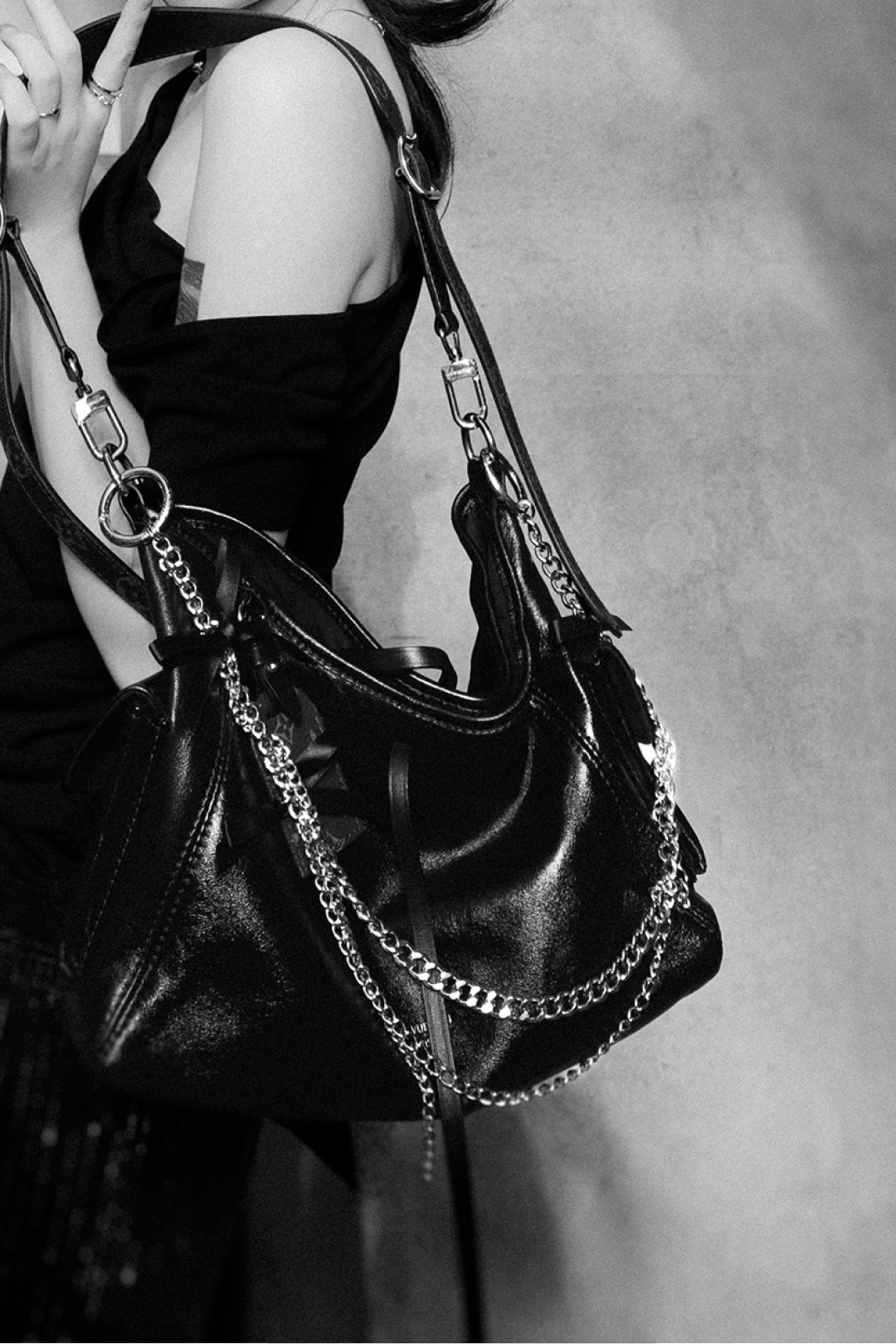
06Our CHAINS series: the chatelaine, pared back
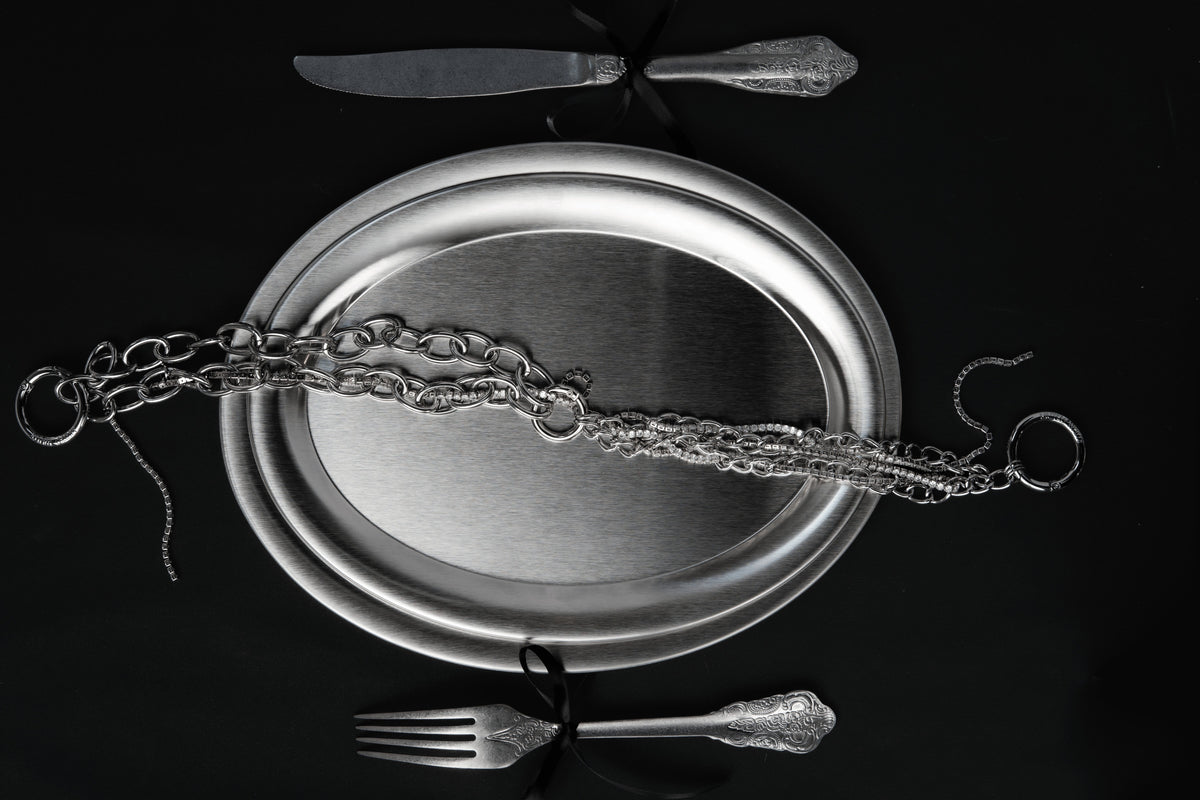
MUTED WHITE's CHAINS series keeps the chain and the bow and leaves out the tools. Every piece has a signature round carabiner at both ends, so it clips onto a bag or onto any trousers with belt loops. Each one is handmade, finished by hand, and designed in Hong Kong.
C01 Asymmetric Bow Chain. Asymmetric stainless steel Cuban chains with three double-faced satin bows and a 15 cm dangling chain, about 52 cm long, in black or blue.
C02 Multi-way Mixed Chain & Glimmer Bow. A bold Cuban chain layered with finer mixed chains, about 48 cm, with a detachable black satin bow finished in brilliant-cut zirconia. Also available without the bow.
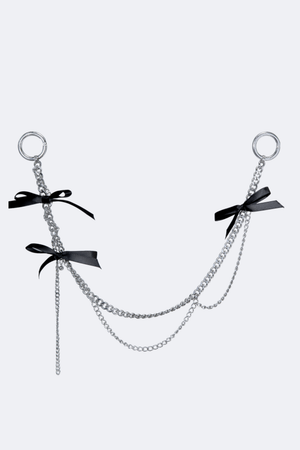 C01 Asymmetric Bow Chain, Black$93
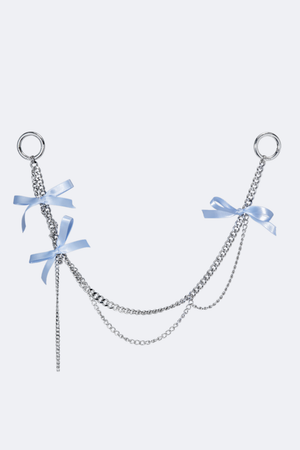 C01 Asymmetric Bow Chain, Blue$93
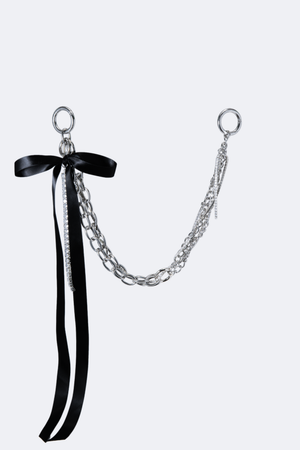 C02 Mixed Chain & Glimmer Bow$158
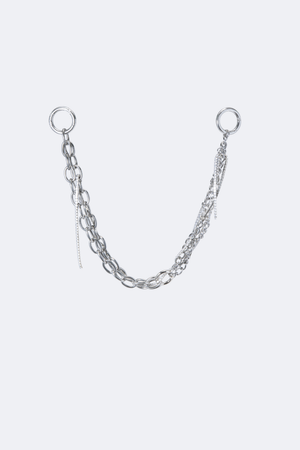 C02 Mixed Chain, without bow$133
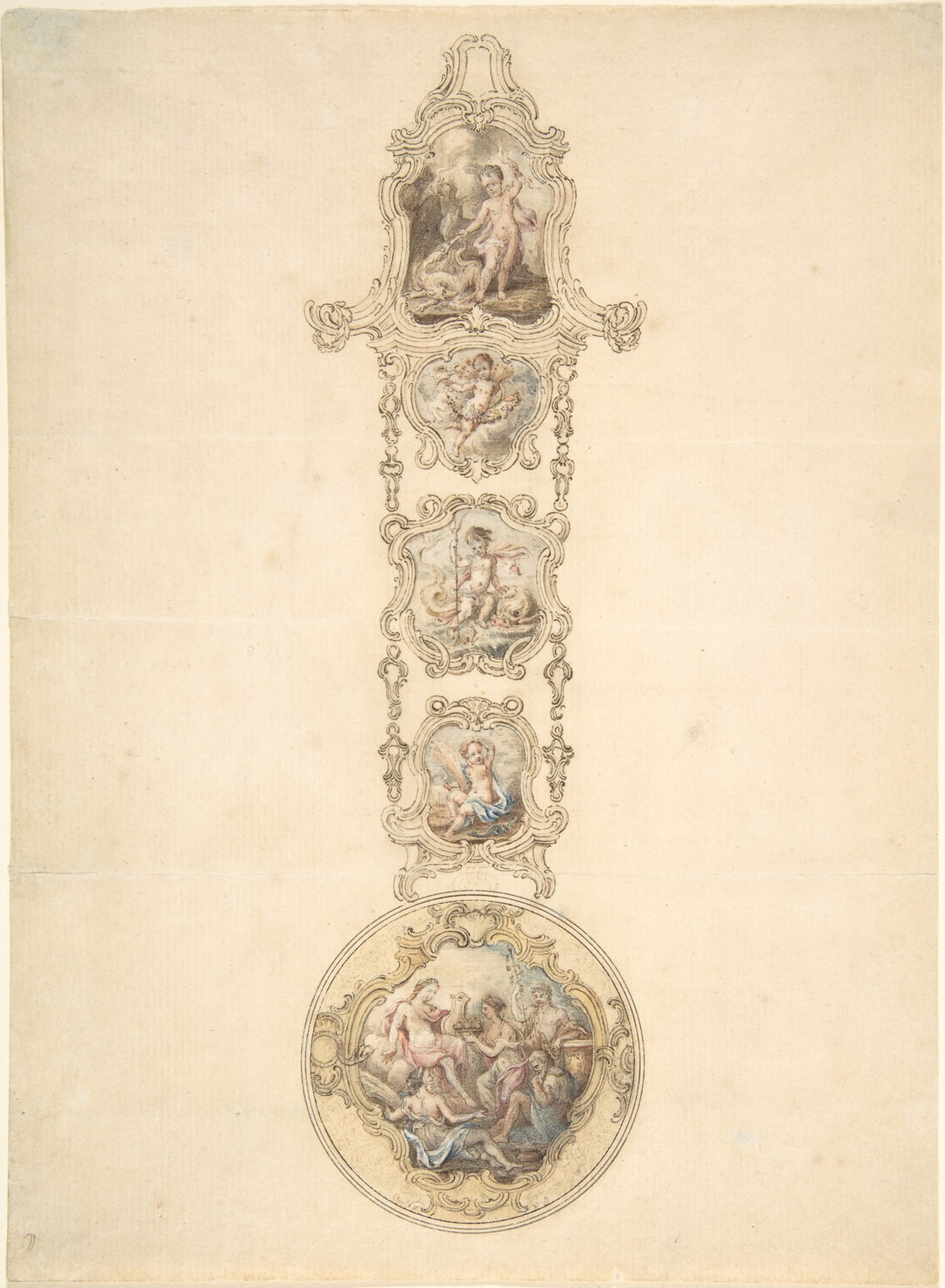
MUTED WHITE takes its ideas from classical art and mythology. The drawing below, made around 1766 by the London enameller George Michael Moser, plots a chatelaine as a column of painted mythological scenes ending in a watchcase. It is the closest thing we have found to a mood board for the series.
FAQFrequently asked questions
What is a chatelaine?
A chatelaine is a decorative clasp or hook worn at the waist, with chains that hold small objects such as keys, scissors, a thimble, a watch or a mirror. It was most popular from the 18th to the late 19th century.
Are chatelaines back in fashion?
Yes, in a new form. Many 2026 designer bag charms, including Dior's thimble and tape-measure charms and Louis Vuitton's belt-loop watch, borrow the chatelaine's idea of hanging small, personal objects on a chain where they can be seen.
How do you wear a chain on trousers?
Clip one end of the chain to a front belt loop and the other to a side or back belt loop, so the chain hangs in a loose curve at the hip. Chains with a carabiner at each end, like the MUTED WHITE CHAINS series, work on any trousers with belt loops.
What is the difference between a bag charm and a bag chain?
A bag charm usually hangs from one point, like a pendant. A bag chain clips on at both ends and drapes across the bag. Many bag chains can also be worn at the waist.
See the full visual issue on Instagram →
Sources: Charlotte Gere on Victoria and Albert's jewellery (Royal Collection Trust); Gill MacGregor and Jessica Rose Harpley, The Journal of Dress History, Autumn 2020; V&A; official Dior, Louis Vuitton, Prada and Chanel product and collection pages; WatchPro; Vogue Arabia.
Historical images: The Metropolitan Museum of Art, Open Access (public domain). Product photographs © MUTED WHITE.